
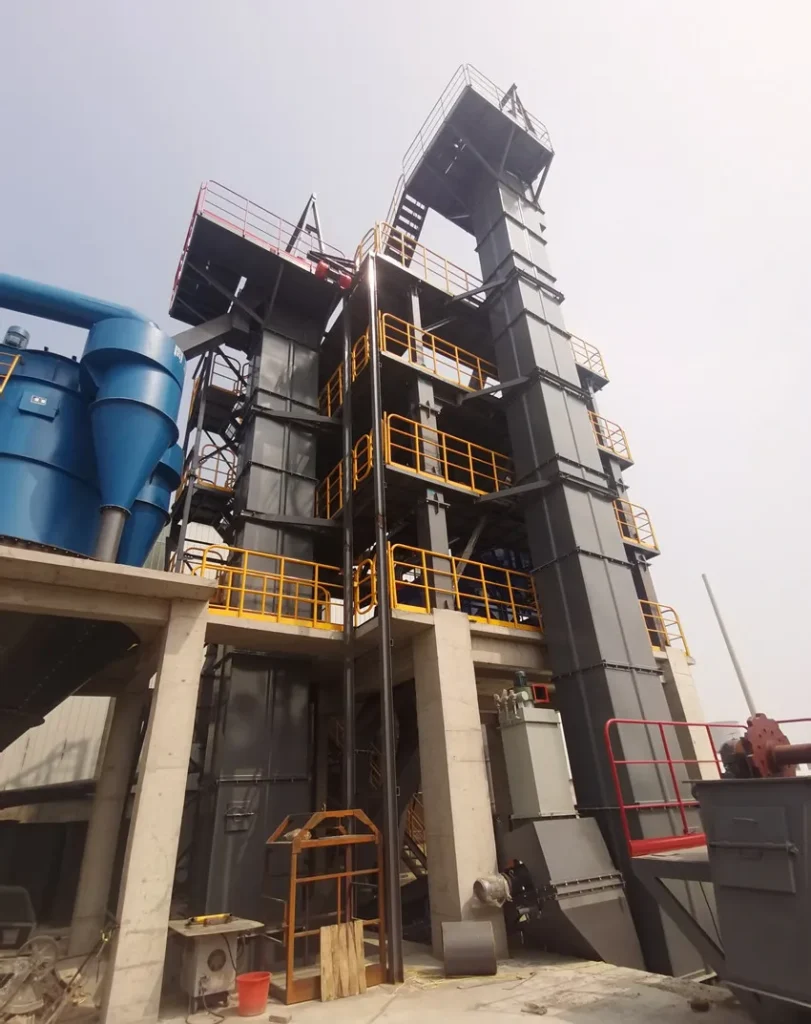
In industrial production, bucket elevators serve as critical vertical conveying equipment, and their performance directly impacts the efficiency of the entire production line. However, many users face concerns such as failure to meet desired capacity or low operational efficiency—issues often stemming from improper selection. Hebi General is here to share the core considerations in selecting a bucket elevator to help you avoid common pitfalls.
I. Material Characteristics: The Primary Factor in Selection
Material properties are the fundamental basis for bucket elevator selection and directly determine the type of equipment and structural configuration.
Physical Properties: Include particle size, bulk density, moisture content, flowability, and abrasiveness. For powdered materials (e.g., cement, coal powder), a TD belt-type elevator may be used. For highly abrasive materials (e.g., ores, clinker), a stainless steel bucket elevator is recommended.
Temperature Characteristics: Different equipment types vary significantly in their tolerance to material temperature. TD belt-type elevators are suitable for materials under 60°C, while NE chain-type elevators can handle materials up to 250°C.
Special Properties: Explosive materials require explosion-proof designs, sticky materials need special buckets, and food-grade materials must use stainless steel construction.
II. Conveying Capacity Calculation: Scientifically Determine Model Specifications
Insufficient capacity often results from a mismatch between theoretical calculations and actual requirements. Accurate conveying capacity calculation is essential. During selection, it is advisable to incorporate a 10-20% margin to account for feed fluctuations and future increases in production demand.
III. Key Structural Configurations: Determining Operational Efficiency
Bucket Type
Deep Scoop (SH): Suitable for dry, free-flowing materials (e.g., cement, grains).
Shallow Scoop (Q-type) and Medium-Depth Scoop (ZH): Ideal for moist, easily compacted materials (e.g., wet sand, fertilizer).
Traction Element
Rubber Belt: Suitable for low to medium capacity applications with low material temperature.
Circular Chain: Resistant to high temperatures, ideal for large lump materials.
Plate Chain: High strength, with NE50 and above models featuring double-strand chain design, suitable for heavy-duty and high-lift applications.
Proper selection can reduce energy consumption by 30%, increase capacity by over 20%, and extend service life by 3-5 times. Tailoring the solution based on actual working conditions is key to ensuring stable and efficient operation of the equipment.